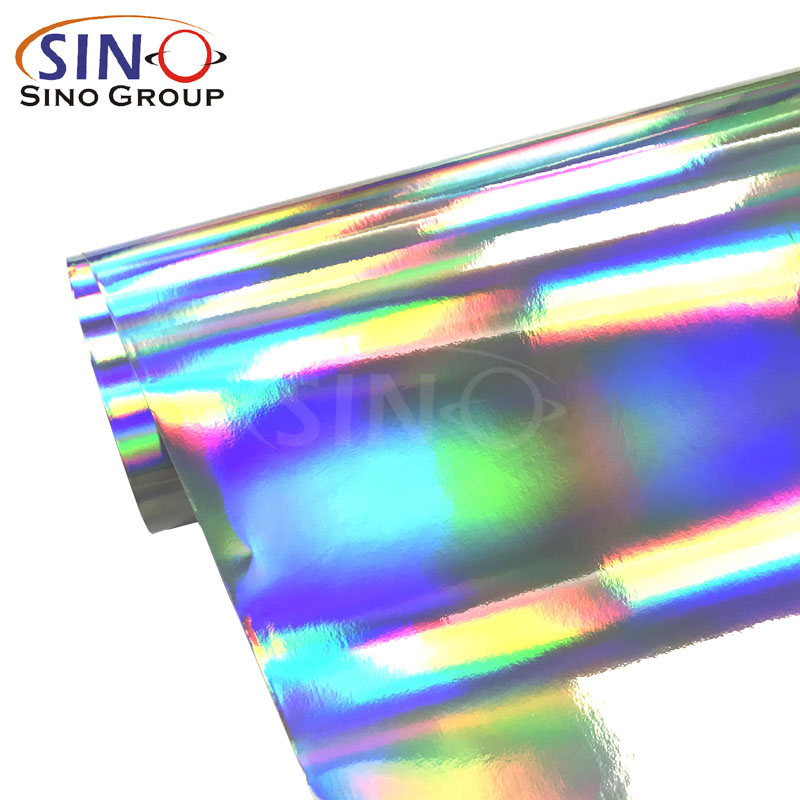
Not Just Trends — It’s About Competition for Eyes
Let me be honest: holographic printable vinyl isn’t some kind of new art trend that suddenly everyone wants to imitate. If you walk into a busy mall at 6 pm during a weekend sale, every store has posters. Lots of them. Everyone’s fighting for attention.
In those conditions, “nice design” isn’t enough. People don’t stop just because the color palette is balanced. What matters is whether someone glances twice.
That’s where holographic effects help. Not because they’re “cool,” but because they create variation under different lights — and humans notice variation.
Small Use Beats Full Coverage, Most of the Time
Here’s something I notice a lot in real printing shops: when printers first try holographic vinyl, they often go overboard. They cover entire banners, display walls, window wraps — all shiny.
But most of the time, this doesn’t work the way they expected. Instead of helping, it dilutes the message. It’s like putting glitter on everything in a room — nothing stands out because everything is shiny.
So what tends to work well?
– A headline
– A logo
– A key shape in the design
– A rhythm stripe behind a call to action
This is exactly how many experienced printers recommend using it: not everywhere, just where it counts.
Window Graphics — Light Isn’t Constant, and That’s the Point
Window graphics are a weird category. People sometimes choose holographic vinyl for its color, which is backwards. The real reason it works is how it changes under light.
Morning light is different from midday light, and different again from evening indoor lighting. This means the same printed graphic can seem subtly different throughout the day. Some shop owners actually call that a “built-in animation effect,” which is a funny way to put it, but it makes sense.
Some owners like it. Others don’t care either way. But it’s consistent that people look at windows with this material more than plain ones.
Signage Has a Clock on It — That’s Not a Problem
A big mistake is thinking holographic printable vinyl must replace outdoor signage forever.
It doesn’t.
In real life, printers usually assign a lifespan to it. Promotional boards, point-of-sale signs, indoor event signs — these all have a clear end date. Once the campaign ends, the graphic comes down. That’s the workflow most customers are comfortable with.
If a client wants something to last years in direct sunlight, that’s not this material’s strong suit. People in the trades generally know this and tell clients upfront.
Short-Term Advertising Is the Sweet Spot
In short-term advertising — pop-ups, monthly campaigns, limited promotions — this material does an honest job.
Nothing heroic, just functional:
– It gets noticed
– It doesn’t require extra lighting
– It prints and cuts like most printable vinyl
– It integrates with normal workflows
It’s not meant to replace long-term films. It’s meant to solve a visibility problem for a specific window of time.
That’s why distributors keep it in stock. It’s not a daily mover, but it fills a demand that keeps returning.
Final Thought — Honest, Not Polished
Printers and brands don’t choose holographic printable vinyl because it’s flashy. They choose it because there’s a specific problem:
“My graphic isn’t getting attention in a crowded visual space.”
Once that problem is clear, the material becomes useful — not magical, not perfect, just practical for short runs and attention-driven work.