Cruising down the highway on a scorching summer day, your car’s interior cool and protected from the sun’s relentless glare,all while maintaining crystal-clear visibility and a sleek stylish look. But with terms like VLT, UVR, and ceramic vs. carbon film swirling around, choosing the right window tint can feel like decoding a secret language. In this guide, we will cut through the jargon and equip you with everything you need to transform your ride into a sanctuary of comfort, privacy, and protection.
Decoding Technical Metrics
● VLT:Visible Light Transmission (VLT) refers to the percentage of visible light that passes through material without being absorbed or reflected.
● IRR:Infrared Rejection (IRR) measures the ability of a material or coating to block or reflect infrared radiation. It is expressed as a percentage, indicating how much IR energy is prevented from passing through.
● UVR:Ultraviolet Rejection (UVR) measures the ability of a material to block or absorb ultraviolet radiation. Expressed as a percentage, it indicates how effectively UV rays are prevented from transmission.

Different Type of Window Tint
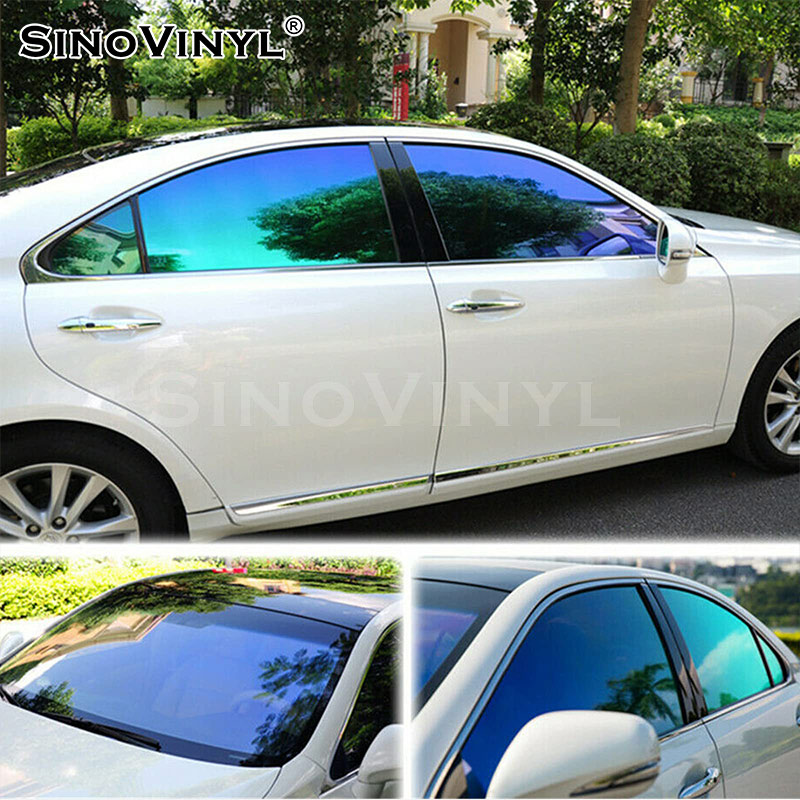
Window tint film are made from material like polyester, metalized coatings, ceramic particles, or carbon, offering varying levels of performance.We have dyed window tint,metallic tint,carbon window tint,ceramic window tint.The following article will give you a detailed understanding of the different types of window tints.
Selection Guide:How To Choose Different Type of Window Tint
Window Tint Levels

5% window tint
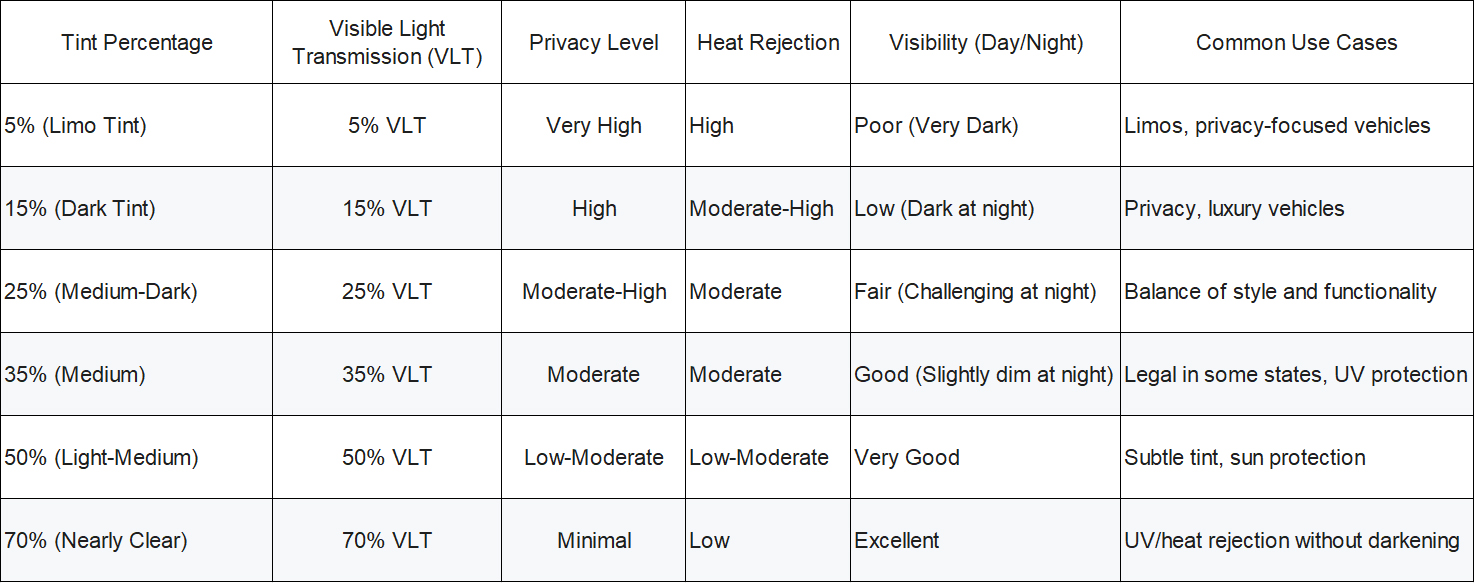
also known as “limo tint,” is an ultra-dark automotive or architectural window film that allows only 5% VLT. This means it blocks 95% of incoming light, providing maximum privacy, glare reduction, and heat rejection.
15% window tint
It allow only 15% of visible light to pass through, while blocking 85% of sunlight. This creates a dark, sleek appearance and offers enhanced privacy, UV protection, and heat reduction.
25% Window Tint
Is mid-range automotive or architectural window film designed to block 75% of visible light (allowing 25% light transmission) while offering a balance of privacy, UV protection, and heat reduction. It provides a sleek, darker appearance without significantly compromising visibility during daytime or nighttime driving.

35% Window Tint
Is a versatile and widely used window film that allows 35% of visible light transmission (VLT) while blocking 65% of incoming light. This mid-range tint offers a balanced combination of privacy, UV protection, heat reduction, and style, making it a popular choice for both automotive and architectural applications.
50% Window Tint
Is a light to medium window film that allows 50% visible light transmission (VLT) while blocking 50% of incoming light. This tint offers a subtle, sophisticated appearance with functional benefits, making it ideal for users who prioritize clarity, UV protection, and heat reduction without excessive darkness.
70% Window Tint
Is an ultra-light, nearly transparent window film that allows 70% visible light transmission (VLT) while blocking 30% of incoming light and 99%+ of UV rays. This tint is designed for users who prioritize maximum visibility, UV protection, and heat reduction while maintaining a factory-like appearance.
How To Installing(DIY) Window Tint
Installing car window tint isn’t just about style—it’s a game-changer for comfort, safety, and saving. But here’s the catch: one wrong move could leave you battling bubble, legal headache, or peeling film.In this step-by-step guide, you’ll unlock the secrets to professional-grade results without the salon price tag.
Ultimate Guide:How To Installing (DIY) Window Tint