Paint Protection Film

Home >> News

Choosing the Right PPF: A Buyer's Guide

Sep 28, 2025
You know that awful feeling. You’re washing your car, and right there on the hood—a new rock chip. Or you find a mysterious scratch that definitely wasn’t there yesterday. I’ve been there more times than I’d like to admit, and it never gets easier. That’s exactly why I started looking into paint protection film, or PPF. It’s the best defense out there, but wow, trying to choose the right one can make your head spin. Is it actually worth the cash? Should you even think about a DIY kit? And what’s the deal with all these different thicknesses and “self-healing” finishes?
Well, take a deep breath. In this guide, I’m going to walk you through everything, step-by-step. We’ll talk real costs, compare pre-cut kits to custom jobs, and I’ll even give you my personal take on the top brands. Most importantly, I’ll tell you the exact questions you need to ask an installer so you can drive away with confidence, knowing your car’s paint is safe.

1. What is Paint Protection Film? Let’s Get Simple.

Let’s cut through the jargon. Imagine the best screen protector you can buy for your phone. Now, imagine making it ten times tougher and stretching it over the front of your car. That’s PPF in a nutshell.
It’s this amazing, clear vinyl layer that acts like a sacrificial shield for your paint. When a rock flies up, it hits the film, not your precious clear coat. It takes the hit from bug acids, bird droppings, and even those light scratches from automatic car washes. The beauty of it is that it’s virtually invisible. It’s like an invisible suit of armor that keeps your car looking showroom new.

2. The Real Cost: It’s an Investment, Not Just a Bill.

Let’s be honest, the price tag is the biggest hurdle. I get it. But you have to shift your mindset from seeing it as a cost to seeing it as an investment in your car’s long-term value.
The price isn’t simple, and here’s why:
  • How much car are you covering? Just the front bumper and hood? The full front end? Or the entire vehicle? Obviously, a partial job costs a lot less than wrapping the whole car.
  • The film itself matters. There are cheap films and there are premium films. The good stuff has better self-healing tech, better clarity, and comes with a longer warranty. You absolutely pay for that quality.
  • The installer is everything. This is the big one. A seasoned pro with a flawless portfolio will charge more than a new shop. But you’re paying for their skill, and let me tell you, that skill is what makes the film look invisible or look terrible.
A super low price can be a red flag. It might mean they’re using a low-grade film that will yellow over time, or worse, an installer who might leave you with uneven edges and bubbles.

3. DIY vs. Pro: Please, Don’t Try This at Home.

I’ll admit, those DIY kits you see online are tempting. The price is a fraction of a professional install! But I’m going to be blunt with you: applying PPF is nothing—and I mean nothing—like putting a screen protector on your phone. It is arguably one of the most frustrating DIY car projects imaginable.
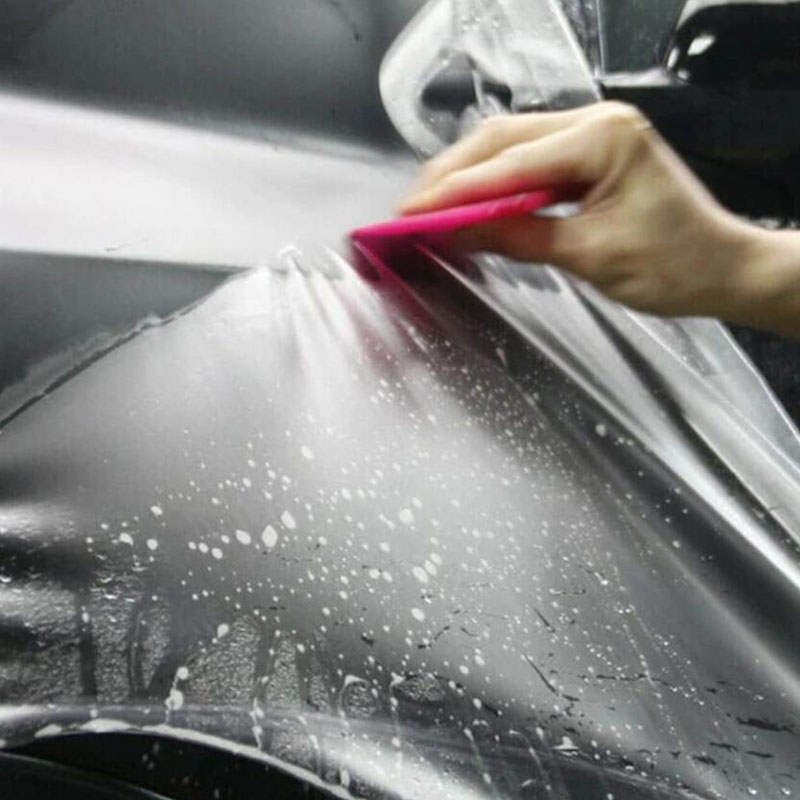
Here’s the reality. Pros use a special slip solution to position the film, but then they break out heat guns and squeegees to stretch and mold it over every complex curve. If a single speck of dust gets underneath, it’s trapped forever. If you stretch it wrong, it wrinkles or tears. For a first-timer, you’re almost guaranteed to end up with a bubbly, misaligned mess that wastes your money and your weekend.
My two cents? Save yourself the headache. A professional installation is worth every single penny for a seamless, invisible finish that you’ll be happy with for years.

4. Thickness Matters: A Quick Guide to “Mils”

You’ll hear thickness talked about in “mils” (a thousandth of an inch). It’s a key factor in protection.
Most films sit between 6 and 10 mils thick for the base layer.
  • Thinner films (6-8 mils): These are a bit more forgiving for installers on cars with wild curves. They’re great for fending off bugs, sand, and light debris.
  • Thicker films (8-10+ mils): This is your heavy-duty armor. It offers much better resistance against serious rock chips and impacts.
There’s a trade-off, though. A very thick film can be trickier to mold perfectly around tight curves. For most folks, a high-quality 8-mil film hits the sweet spot: tough as nails but still manageable to install flawlessly. Bottom line: thicker generally means more durable.

5. Gloss, Matte, or Self-Healing? It’s Not Just Protection.

This is where PPF gets really cool. It’s not just about protection anymore; it can change your car’s entire look.
  • Gloss: The standard. A good gloss PPF will actually make your paint look deeper and wetter than ever. It’s like a permanent wax job.
  • Matte/Satin: This is a game-changer. Got a glossy car but love the matte look? A matte PPF transforms the finish completely, giving it that sleek, non-reflective vibe while protecting the original gloss paint underneath.
  • Self-Healing: It feels like magic. The top layer of many premium films can heal light swirl marks and scratches. A little heat from the sun or warm water makes the material flow back together, erasing minor blemishes. It won’t fix a deep cut, but it’s amazing for keeping the film looking new.


6. How to Find an Installer You Can Actually Trust.

This is the most important step. A perfect film applied poorly is a waste of money. Here’s how I separate the best from the rest:
  1. Stalk Their Social Media: Instagram and Facebook are your best friends. A great installer is proud of their work and will post high-quality photos and videos of their jobs. Look for close-ups!
  2. Inspect the Edges: In their portfolio, zoom in. The film should be wrapped around panel edges (like on the hood or fenders), not just cut on top, leaving a seam. Wrapped edges are the mark of a top-tier shop.
  3. Read the Reviews Wisely: Don’t just look at the star rating. Read what people say about the shop’s cleanliness, their communication, and how the film looks months later.
  4. Ask Around: Hit up a local car meet or ask in a car enthusiast group. Personal recommendations are gold.

7. Pre-Cut Kits vs. Custom: The Biggest Decision.

Here’s where you need to make a choice.
  • Pre-Cut Kits: These are computer-patterned pieces for your specific car. They’re cheaper and faster to install. The downside? The patterns are often conservative, meaning the film stops short of panel edges. This leaves a seam that can collect dirt and expose the paint edge.
  • Custom Installation: This is the gold standard. The installer uses a large roll of film and hand-trims it directly on your car, wrapping the material around the edges for a seamless, invisible look. It’s more expensive, but the result is far superior and more protective.
If you want the best possible outcome and plan on keeping the car long-term, custom is the only way to go.

8. Don’t Be Shy: Questions to Ask Your Installer.

Walk into the shop armed with these questions. A pro will have no problem answering them.
  • “Which brand of film do you use most and why do you prefer it?”
  • “Can you show me examples of your work, especially close-ups of the edges on the hood and fenders?”
  • “Do you primarily do custom wraps or use pre-cut kits?” (You want to hear “custom”).
  • “What does the warranty actually cover? Does it protect against yellowing or staining?”
  • “What’s your process for washing and decontaminating the paint before installation?”
Their answers will tell you everything about their expertise and attention to detail.

9. How Long Will My PPF Actually Last?

PPF isn’t permanent, but the good stuff is incredibly durable. You can expect a high-quality film to last anywhere from 5 to 10 years. A few things will determine its lifespan:
  • Film Quality: Better brands have superior UV resistance to prevent yellowing.
  • The Install: A poor installation that leaves lifting edges will shorten its life.
  • Your Environment: A car that lives in the Arizona sun or sees winter road salt will have a tougher life than a garage-kept car.
  • How You Care for It: This is huge. Proper maintenance keeps it looking fresh for years.

Wrapping Up

I know this seems like a lot to take in, but breaking it down makes it much less scary. Remember, you’re not just buying a product—you’re buying peace of mind. Now that you understand the costs, the importance of the installer, and the different film options, you can make a smart choice. Do your homework, ask those key questions, and trust your gut. The goal is simple: to keep your car looking absolutely stunning for years to come.
*
Feeling more confident about choosing PPF? If you’re in the [Your City/Region] area, I’ve personally vetted the installers I trust. Send me a quick email at [your email address] and I’ll point you in the right direction!

Frequently Asked Questions

1. Is PPF really worth the money?
Honestly, it comes down to your car and your peace of mind. If you plan on keeping your car for years, can’t stand the sight of rock chips, and want to protect its resale value, then yes, it’s 100% worth it. Think of it as insurance for your car’s paint.
2. How long does PPF actually last?
A good film from a top brand, installed by a pro, should easily last 5 to 10 years. Many even come with warranties that long. Its life depends on the film quality, the installation, and how well you take care of it.
3. Can you see the film on the car?
When installed correctly by a true professional, high-quality PPF is basically invisible. A good gloss film can even make your paint look deeper. You might see a tiny edge if you go looking for it, but the best installers wrap the edges so you never will.
Get Free Samples