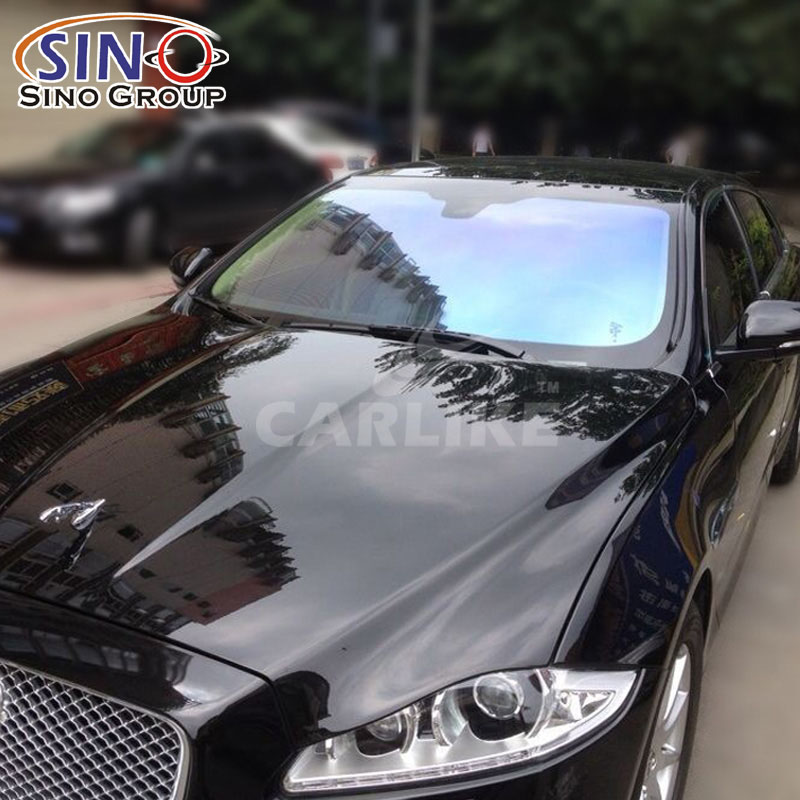
What is Car Window Tinting?
Car window tinting involves applying a thin film to the interior or exterior of a vehicle’s windows. This film is typically made from polyester and can be coated with a variety of materials to enhance its properties. The primary purpose of window tinting is to reduce the amount of visible light, ultraviolet (UV) rays, and infrared (IR) radiation that can pass through the glass.
Benefits of Car Window Tinting
- 1. Heat Reduction:
– Tinted windows help to reduce the amount of heat that enters the vehicle by blocking a significant portion of the sun’s infrared radiation. This can make the interior of the car cooler, especially during hot weather. - 2. UV Protection:
– Tinting films block up to 99% of the sun’s harmful UV rays. This not only protects the occupants from potential skin damage but also prevents the interior upholstery, dashboard, and other materials from fading and cracking over time. - 3. Glare Reduction:
– Tinted windows reduce the glare from the sun, headlights, and other bright lights. This enhances driver comfort and reduces eye strain, making driving safer. - 4. Privacy and Security:
– Darker tints can provide greater privacy by making it more difficult for people outside to see into the vehicle. This can also deter potential thieves who are unable to see valuables inside the car. - 5. Aesthetic Enhancement:
– Many car owners choose to tint their windows for aesthetic reasons. Tinted windows can give a vehicle a sleek, stylish appearance. - 6. Shatter Resistance:
– Window films can help hold shattered glass together in the event of an accident or break-in, reducing the risk of injury from flying glass fragments.
How Car Window Tinting Works
Car window tinting works by applying a thin, multi-layered film to the interior surface of a vehicle’s windows. This film is engineered to reduce the amount of visible light, ultraviolet (UV) rays, and infrared (IR) radiation that can penetrate through the glass. The effectiveness and properties of window tinting depend on the materials and technologies used in the film. Here’s a detailed explanation of how car window tinting works:
Composition of Window Tint Films
Polyester Base:
The primary component of window tint film is a thin layer of polyester. This provides the film with its durability and clarity.
Adhesive Layer:
A clear adhesive layer binds the film to the window. This adhesive is designed to adhere strongly to glass surfaces and ensure long-lasting application.
UV Blocker:
A layer specifically designed to block UV radiation, protecting the car’s interior and the occupants from harmful sun exposure.
Tinting Agents:
Depending on the type of film, tinting agents like dyes, metals, carbon, or ceramic particles are embedded within the film to achieve the desired level of darkness and heat rejection.
Protective Coating:
The outermost layer is often a scratch-resistant coating that protects the film from damage and ensures longevity.
How It Works
Reduction of Visible Light Transmission (VLT):
Window tint films are graded by the percentage of visible light they allow through. A lower VLT percentage means darker tint and less light passing through. For example, a film with 20% VLT allows 20% of visible light to pass through, blocking 80%.
Heat Rejection:
The film can reflect and absorb a significant portion of the sun’s heat. Metalized and ceramic films are particularly effective at reflecting infrared radiation, which is responsible for the heat we feel from sunlight.
UV Protection:
High-quality films block up to 99% of UV rays. This protection helps prevent skin damage and slows down the fading and cracking of the vehicle’s interior surfaces.
Glare Reduction:
By reducing the amount of light that passes through the windows, tinted films decrease glare from the sun, headlights, and other bright light sources, making driving safer and more comfortable.
Privacy and Security:
Tinted films obscure the view into the car from the outside, offering privacy for the occupants. Additionally, they can provide a level of security by making it harder for potential thieves to see valuables inside the vehicle.
Shatter Resistance:
The film can hold shattered glass together in case of an accident or impact, reducing the risk of injury from flying glass pieces.


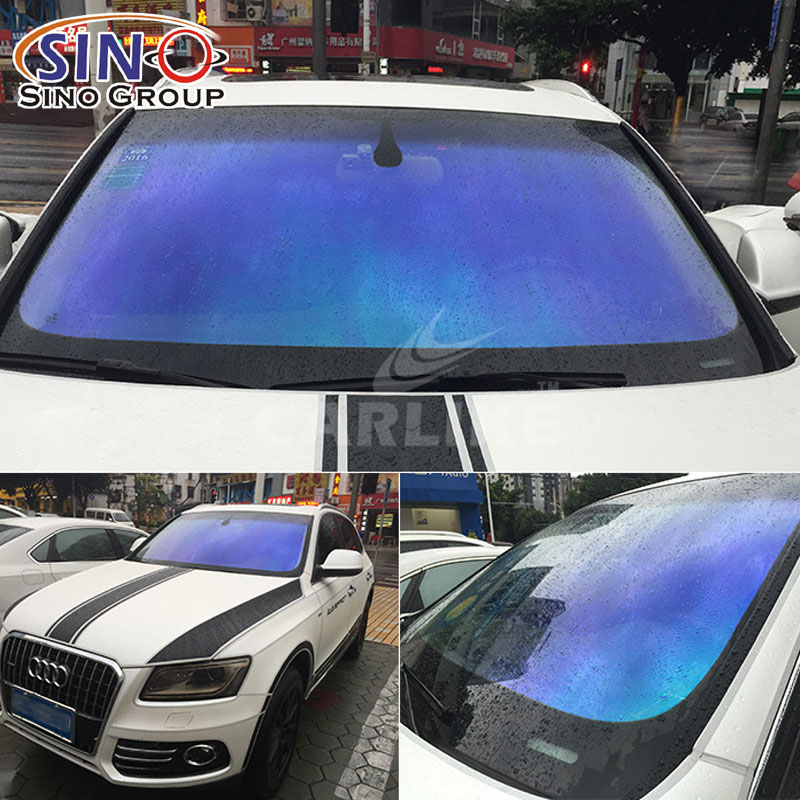
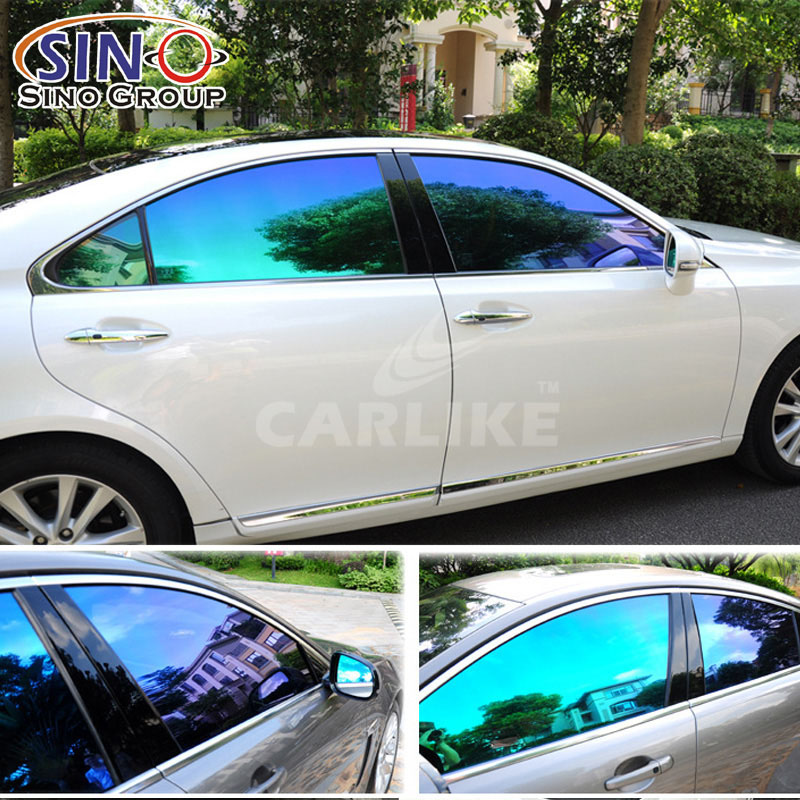
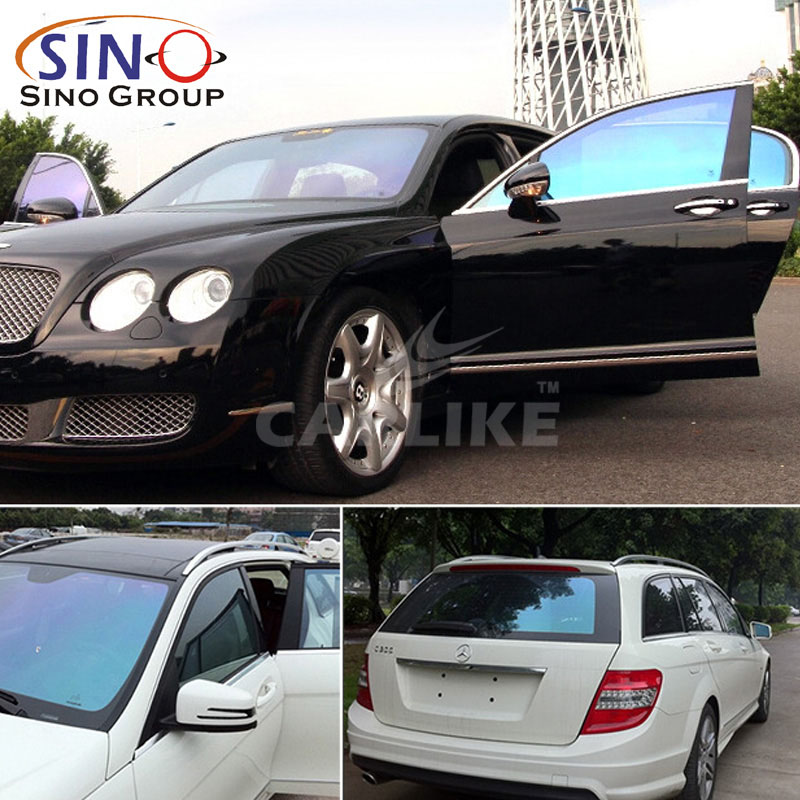
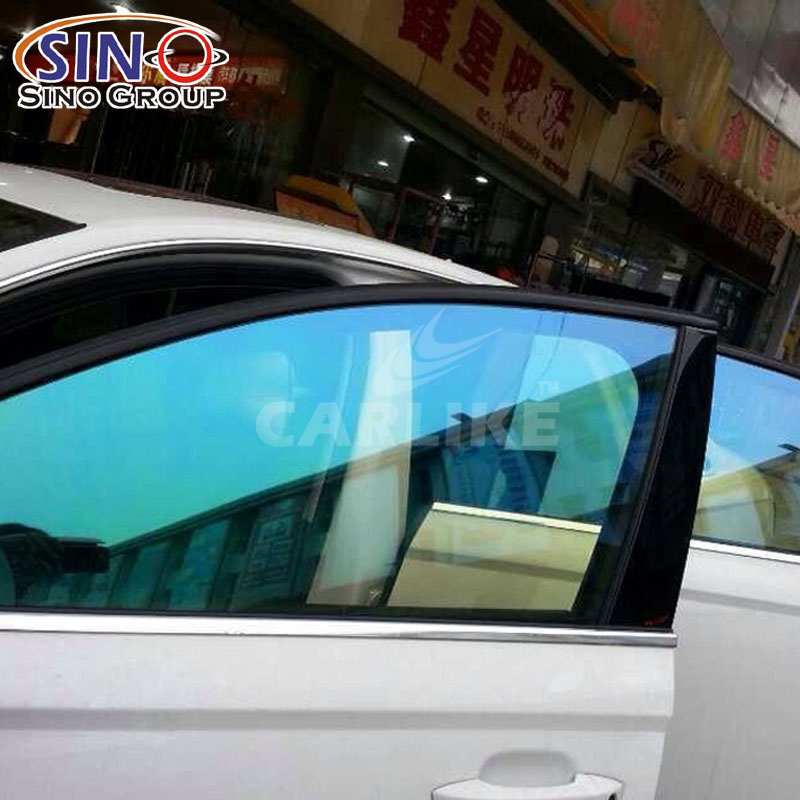
Chameleon Window Tint Film


Window Tint Film

Chameleon Window Tint Film